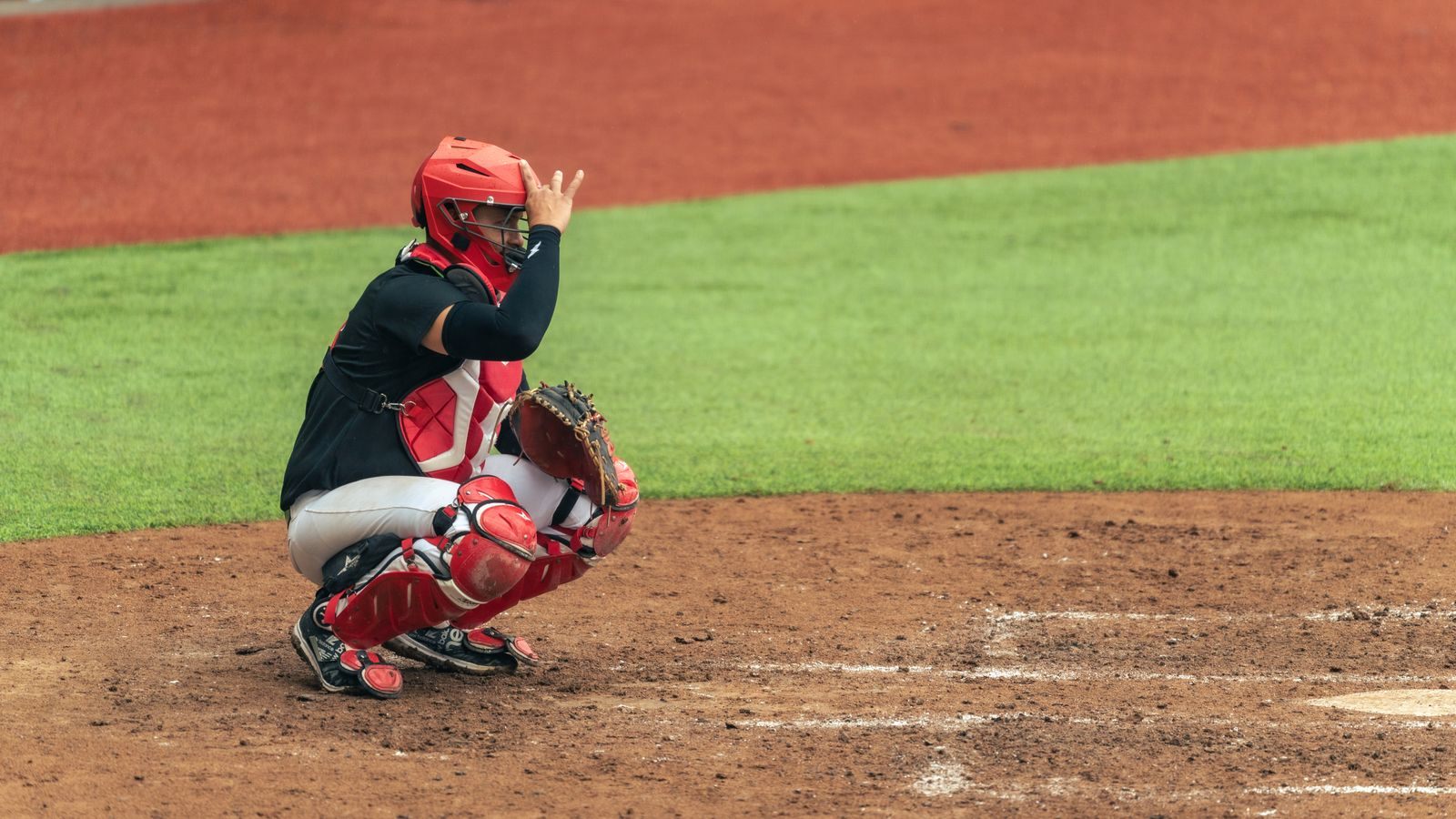
Batting Helmets and Catcher’s Gear
The protective side of baseball equipment, and the standards behind it.
NOCSAE GuidanceHelmets and catcher’s gear are the protective core of baseball equipment. They are also the items where the standard printed inside matters more than anything printed on the outside.
Batting Helmets and the NOCSAE Mark
NOCSAE, the National Operating Committee on Standards for Athletic Equipment, writes the performance standards that batting helmets, catcher’s helmets and chest protectors are tested against. A helmet that meets the standard carries a permanent NOCSAE mark and warning label. Youth leagues, high school rules and most travel organizations require that mark.
- Fit: snug all round, sitting about a finger’s width above the eyebrows, without rocking when the player shakes their head.
- Ear flaps: double-flap helmets protect both sides and are common in youth play; older hitters often wear a single flap facing the pitcher.
- Face guards: popular with young hitters and often required or encouraged by individual leagues.
- Recertification: per NOCSAE recertification guidance, only NOCSAE-licensed companies can recertify baseball and softball helmets.
The Full Catcher’s Kit
| Item | What to look for |
|---|---|
| Helmet and mask | A hockey-style catcher’s helmet or a mask with skull cap, NOCSAE-certified, with a throat guard. |
| Chest protector | Long enough to cover from collarbone to just above the belt; NOCSAE ND200 certification for commotio cordis protection. |
| Shin guards | Knee cap to the top of the foot, with straps that stay put in a crouch. |
| Catcher’s mitt | Heavily padded, measured by circumference. |
| Cup | Required for boys in high school rules and many youth rulebooks. |
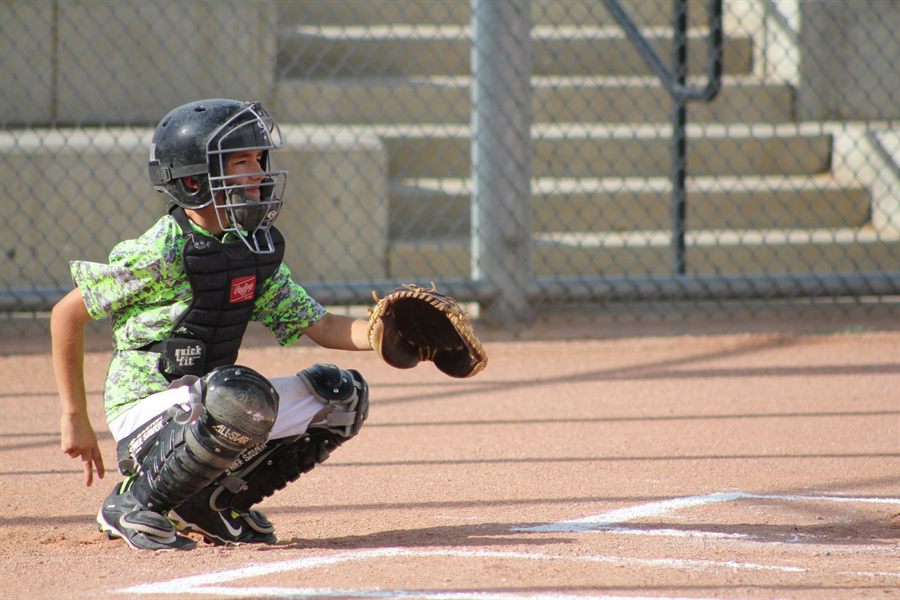
High school rules (NFHS) require a catcher’s chest protector that meets the NOCSAE standard, and many youth organizations are following. Even where it is not yet required, a protector certified against commotio cordis — a rare but serious heart rhythm disruption caused by a blow to the chest — is worth asking for.
Fitting Catcher’s Gear
- Fit the chest protector with the player in a full crouch; it should not ride up into the throat or leave the stomach exposed.
- Shin guards should bend at the knee without gapping at the top.
- The mask should not slide when the catcher flips it off to field a pop-up.
- Youth sets come in age ranges; check the measurements rather than the age label alone.
Frequently Asked Questions
Does an old batting helmet need to be replaced?
Follow the manufacturer’s instructions. NOCSAE says only a NOCSAE-licensed company can recertify baseball and softball helmets. Replace any helmet with a crack, loose padding or a missing NOCSAE mark.
Can I add stickers or a face guard to a helmet?
Adding parts to a certified helmet can change its certification. Use only accessories the helmet maker approves for that model, and check your league’s rules.
Read NOCSAE’s Guidance Directly
NOCSAE publishes the standards and recertification guidance for helmets and protectors. Check the source before you buy or recertify.
Visit NOCSAE